Event Documentation Services in Indonesia: A B2B Vendor Selection Guide
How marketing leaders at foreign brands evaluate an Indonesia-based event documentation vendor — pre-event readiness, deliverables, and footage rights.
Event documentation is the practice of turning a single live event into reusable photo and video assets that work across every channel — and choosing the right vendor depends far more on pre-event readiness than on camera specs. This guide gives marketing directors, CMOs, and brand managers a way to judge a vendor before they sign.
Direct answer: Choosing an event documentation vendor for a brand or corporate event means scoring five things — pre-event readiness (shot list, location recce, permit checks), event-day setup (camera count, drone, audio, on-site editor), recap turnaround, clean per-channel handover, and clear footage usage rights. Price matters, but a vendor who understands the run-of-show and venue permits will shape your outcome far more than the one quoting the lowest rate.
Why this matters if you're a foreign brand operating in Indonesia
If your headquarters sits in New York, Singapore, or Sydney and you're launching a product, opening an office, or running a partner summit in Jakarta, you inherit a specific problem: you can't be on the ground for the vendor briefing, you may not speak the language of the run-of-show, and you're evaluating a partner you can't easily reference-check through your usual network.
That raises the stakes on process. A local vendor who runs disciplined pre-production protects you from the two failure modes that hurt foreign brands most: assets that never get delivered in a usable format, and footage you legally can't reuse in your home-market channels. The frameworks below are drawn from handling exactly these moments — high-stakes launches where the client team was often reviewing everything remotely.
When Porsche Indonesia launched the Macan EV, the brand team had no luxury of a second take. A stage that has already been struck cannot be lit again, and every frame had to carry two stories at once: the performance heritage the badge has long stood for, and the electrification chapter just beginning. A moment that large demands a partner who understands that documentation is not simply showing up with a camera — it is the product of planning done long before the event. That is where vendor choice decides whether a single night's investment keeps working or stops at the venue door. The framework for choosing an event documentation service in Jakarta below is distilled from handling moments like that.
Key takeaways:
- The hardest part of event documentation happens before event day — deciding which moments cannot be missed, and building a backup plan for when a camera fails.
- One event feeds many channels: PR needs high-resolution stills, the social team needs fast vertical cuts, management needs footage for reporting. Ask for that separation from the brief.
- Score vendors against five criteria and match deliverables to event type — an internal gathering has very different needs from a press launch.
- Footage usage rights (who can use it, on which channels, for how long) must be written up front, including talent releases and licensed music.
- A credible baseline setup: at minimum two full-frame mirrorless cameras, an on-site editor, a recap reel within the first 24 hours, and multi-format export with no forced re-crop.
The types of event documentation to understand first
Before comparing vendors, understand that "documentation" is not one thing. There are several output types, and every brand needs a different combination depending on the event's purpose.
- Documentation photography — high-resolution stills for press releases, internal reports, and the archive. This is the foundation almost every event needs.
- Highlight video — a 3–5 minute edit that tells the arc of the event, ideal for the brand's owned channels.
- Same-day edit / recap reel — a short 60–90 second cut that can go live while momentum is still hot, usually for social media.
- Drone — aerial capture for venue scale or outdoor activations, subject to location permits.
- Livestream — a live broadcast for audiences who can't attend in person, common at product launches and conferences.
A product launch with press typically needs all five. An internal gathering may only need photography plus one short recap. Deciding this combination up front is the first step before you talk price with any vendor. If your activation is based in the capital, the event documentation Jakarta service page is a useful starting point for reading what a reasonable scope looks like.
The deliverables you're entitled to ask for
What should you receive after the event? This question tends to surface only at handover — and that is exactly where disappointment is born. Clear deliverables protect both sides, and for a remote client team they are the difference between assets you can act on and a folder you have to decode.
One event feeds several channels at once. PR needs high-resolution stills for the release. The social team needs fast vertical cuts. Management needs tidy footage for internal reporting. Because of that, the list of asset recipients should be requested from the brief onward, so output is separated during editing — not dumped into a single link holding thousands of files you have to sort yourself.
A credible baseline setup to benchmark vendors against is simple: at minimum two full-frame mirrorless cameras, plus drone where venue permits allow, a gimbal, and audio recording. An on-site editor sorts footage while the event is still running. A 60–90 second recap reel lands within the first 24 hours, a 3–5 minute highlight video follows, a cleanly edited photo gallery is delivered, and everything is exported in 9:16, 1:1, and 16:9 without a forced re-crop. If a vendor can't explain this plainly, that's an early signal.
For a foreign brand, there's one extra clause worth insisting on: delivery to a cloud folder with consistent, English-readable file naming and a delivery deadline stated in your own time zone. It sounds trivial until you're chasing assets across a 12-hour gap.
Work With Sagara
Got a project in mind?
Free initial consultation, no commitment. Or see our services.
The workflow: pre-event, event day, post-production
Clean event documentation follows four phases. The interesting part is that most delays are not the vendor's fault — they're preventable, if both sides know what they're allowed to hold each other to. The table below is built from field experience, not a generic checklist.
| Phase | What most often causes delays | What you can hold the vendor to |
|---|---|---|
| 1. Brief & location recce | Run-of-show not final, venue permits pending | Written shot list + confirmed drone clearance before event day; recce 1–3 days out for a new venue |
| 2. Event day | Run-of-show changes on site, areas closed off at short notice | Immediate notice the moment a planned shot is missed |
| 3. Selection & editing | Talent / third-party approval for faces & logos in frame | Recap reel in the first 24 hours + a list of assets in progress; revisions through a single point of feedback |
| 4. Handover & archive | Asset recipients unclear (PR vs marketing vs internal) | Tidy cloud folder, consistent naming, separate 9:16 / 1:1 / 16:9 exports — not one link with thousands of files |
Notice the pattern in the middle column: nearly every cause of delay is rooted in the brief phase. An unfinalized run-of-show and pending permits will spread into event day and editing. A good vendor demands this clarity up front, rather than shrugging and blaming conditions at the end. For a remote client, that up-front demand is a feature, not friction — it forces alignment before your team is asleep on the other side of the world.
What we've learned in the field
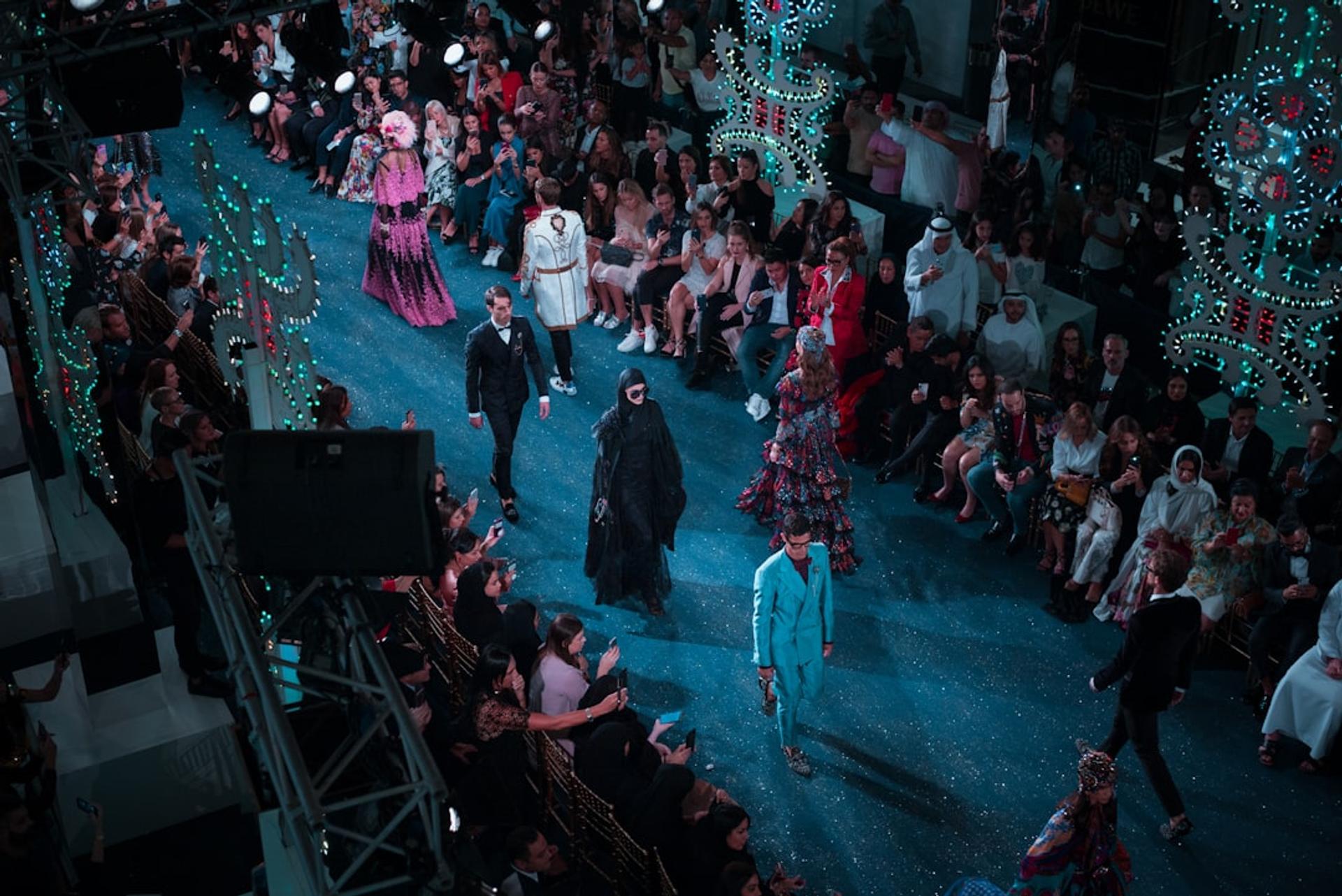
An event runs once. There is no second take. A studio session can be repeated; a stage that has been struck cannot. That line sounds like a cliché until you actually lose a ceremony moment because a crew member was in the wrong position. Here are the lessons that most often decide the outcome.
The hardest part happens before event day: deciding which moments cannot be missed, then preparing a plan for when a camera suddenly fails. The run-of-show is everyone's boss on site. The crew reads it first, agrees on standing positions for speeches and the ceremony, then follows the event organizer's cues. A crew that hasn't memorized the sequence ends up blocking the stage — and that is recorded forever.
Venue permits and guest comfort limit how you can shoot. Some buildings ban drones, some ban flash, some VIP guests refuse to be shot up close. All of this is asked before the event, because one security intervention mid-ceremony costs far more than one lost angle. Finally, footage usage rights determine the lifespan of the asset: who can use it, on which channels, and for how long — written up front, including talent releases and any licensed music that ends up in frame.
For cross-border brands, the rights conversation deserves extra care. Confirm that the usage grant covers your global channels, not just Indonesia, and that talent and music licenses don't expire before your campaign does. Getting this wrong means a beautiful asset you're forced to pull from your international feeds.
How to score a vendor: a five-criteria framework
How do you compare two or three vendors objectively? Instead of relying on gut feel, use a five-criteria framework scored 1–3 per criterion. This forces you to weigh each vendor on the same axes rather than on the polish of their pitch deck.
- Pre-event readiness (score 1–3). Do they produce a written shot list, run a real location recce, and confirm permits before event day? A vendor scoring 3 here is asking you hard questions during the brief. A vendor scoring 1 is waiting to be told everything.
- Event-day setup (score 1–3). Camera count, redundancy, drone capability, audio, and — critically — an on-site editor. Two full-frame bodies with backups is a 3; a single operator with no redundancy is a 1.
- Recap turnaround (score 1–3). A 60–90 second recap in the first 24 hours is a 3. "Sometime next week" is a 1, and for a launch that depends on same-day momentum, that alone can disqualify a vendor.
- Per-channel handover (score 1–3). Separated exports, consistent naming, clear recipient mapping is a 3. One undifferentiated link of thousands of files is a 1.
- Rights clarity (score 1–3). Usage terms, talent releases, and music licenses written into the contract up front is a 3. "We'll sort it out later" is a 1 — and later never comes cheap.
A vendor scoring 13–15 is one you can trust with an irreversible moment. A vendor scoring below 9 is a price quote, not a partner. The framework's real value is that it exposes the vendors who lead with camera gear and stay silent on process — which is precisely the profile that fails you on event day.
Matching deliverables to event type
The same framework applies, but the deliverable mix shifts with the event:
- Product launch with press — the full stack: photography, highlight video, same-day recap, drone (permit permitting), and livestream. This is where rights clarity and recap speed carry the most weight.
- Corporate summit or conference — photography, highlight video, and livestream for remote attendees; recap optional depending on whether the story is public-facing.
- Internal gathering or town hall — photography plus one short recap is usually enough. Over-specifying here just burns budget.
- Outdoor activation or brand experience — drone and same-day social cuts matter most, so venue permits and weather backup plans move to the top of the checklist.
Defining the mix before you request quotes keeps the comparison honest — you're pricing the same scope across vendors rather than comparing apples to a livestream.
Frequently asked questions
How much do event documentation services cost in Indonesia?
Pricing varies widely by scope, crew size, and deliverable mix rather than by a single rate card. A single-photographer internal event sits at the low end; a full press launch with multi-camera video, drone, livestream, and same-day recap sits far higher. Judge quotes against the five-criteria framework above, not against the lowest number — the cheapest quote often omits the on-site editor and per-channel handover that make the assets usable.
Do we need to be physically in Indonesia to brief and approve the work?
No. A capable vendor runs the brief, recce, and revisions remotely, with a written shot list and a single point of feedback so approvals don't fragment across time zones. Confirm delivery deadlines stated in your time zone and cloud handover with English-readable file naming before you sign.
Can we reuse the footage in our global marketing channels?
Only if the usage rights say so. Insist that the grant explicitly covers your international channels, not just Indonesia, and that talent releases and any licensed music remain valid for the full life of your campaign. Get this into the contract at the brief stage — retrofitting rights after the shoot is expensive and sometimes impossible.
How fast can we expect content after the event?
A credible vendor delivers a 60–90 second recap reel within the first 24 hours, followed by the highlight video and edited photo gallery over the following days. If same-day social momentum matters to your launch, make recap turnaround a hard requirement, not a nice-to-have.
What's the single biggest predictor of a good result?
Pre-event readiness. The vendors who ask you hard questions during the brief — about the run-of-show, permits, and which moments cannot be missed — are the ones who deliver. Camera specs are easy to match; disciplined pre-production is what separates a partner from a rental crew.
Are drones allowed at Indonesian venues?
It depends on the venue and location. Many indoor and high-security venues prohibit drones outright, and outdoor use can require clearance. This is exactly the kind of thing a good vendor confirms before event day rather than discovering on site — treat their handling of permits as a direct signal of pre-event readiness.
The bottom line
For a foreign brand running a high-stakes event in Indonesia, the vendor decision is a risk decision, not a price decision. The event runs once. Score candidates on pre-event readiness, event-day setup, recap speed, per-channel handover, and rights clarity — and weight the first and last most heavily, because those are the two that quietly cost you the most when they go wrong. A vendor who understands the run-of-show and the venue's permit reality will protect your one-night investment long after the stage comes down. If your activation is based in the capital, use the event documentation Jakarta service page as a benchmark for what a serious scope looks like before you compare quotes.
Work With Us
Ready to Grow Your Brand with Sagara Ruang?
From social media content to motion branding - free initial consultation, no commitment required.
Let's work together
GOT A PROJECT
IN MIND?
Tell us about your project - free initial consultation, no commitment required.
More Articles