Motion Design for Premium Brands in Indonesia: A 2026 B2B Buyer's Guide
How foreign brands entering Indonesia use motion design to build recognition, signal premium quality, and win attention on a video-first market.
Motion design is the discipline of engineering visual movement - animation, transitions, logo idents, and moving graphics - to turn a brand message into an experience that sticks in memory. For any company entering Indonesia, this matters more than it might in your home market: with 229.4 million internet users (80.66% penetration, per the APJII 2025 survey) and video dominating how they consume content, motion is the primary language of attention in Jakarta and across the archipelago.
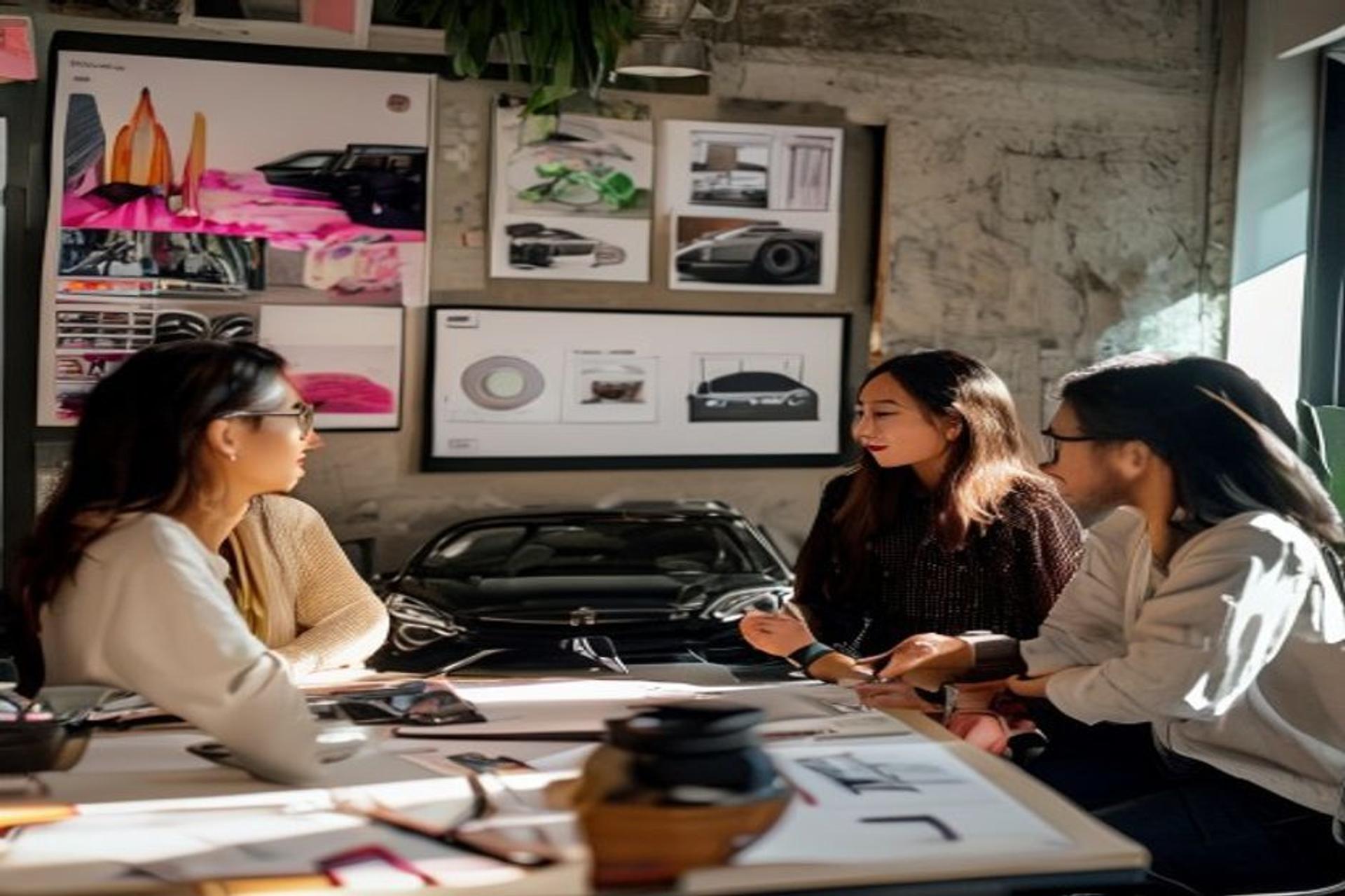
Consider a scenario Western and regional brands routinely face here. When an EV maker with no local awareness prepares to enter Indonesia, the challenge isn't just introducing a product - it's building recognition from zero while immediately establishing a premium position against entrenched legacy automotive players. At that moment, visual movement - how the camera moves, how a piece of technology is revealed, the rhythm of transitions - becomes the difference between "a convincing new brand" and "a new brand that's easy to forget."
Short answer: Motion design is the crafting of moving visual elements to deliver a brand message cinematically and digestibly. For premium brands, its function isn't decoration - it's a tool for shaping perceived quality, from product reveals and explainers to on-screen identity. What separates top-tier work from the ordinary comes down to consistency of rhythm, precision of timing, and how tightly the movement is tied to brand strategy rather than being a cool effect for its own sake.
This guide breaks motion design down from a business-decision angle: when you need it, how to tell quality apart, what it costs, and how the production process runs - written for a brand that has no room for half-finished output.
Why Movement Decides How a Premium Brand Is Perceived
Start with something simple: the human eye catches motion before it reads text. In a crowded feed, the first three seconds decide whether the audience stops or scrolls past. For a premium brand, those three seconds are when the perception of "expensive" or "cheap" is formed.
Indonesian content-consumption behaviour makes this even more urgent than it is elsewhere. APJII 2025 data shows video platforms dominate - TikTok leads with 35.17% of active users, followed by YouTube at 23.76% (APJII, Indonesia Internet Profile 2025). This is a market where short-form video is not a supplementary channel; for many audiences it is the primary one. A brand still relying on static visuals is competing on channels whose algorithms actively prioritise movement.
The gap between a premium brand and a mass-market one lives in the standard. A logo that arrives with a stiff, jerky animation feels cheap, even when the product is expensive. Conversely, a smooth transition and precise timing communicate one thing without words: this brand takes care of the details. Perceived quality is built from hundreds of small details like these, and motion design is where those details are most visible.
There's a reason luxury automotive brands pour large production budgets into a single 30-second reveal video. Visual movement isn't a cosmetic cost - it's an investment in how the brand is remembered.
Consider the memory dimension too. The brain stores sequences of movement more strongly than still images, because motion carries context: direction, tempo, and emotion. When a brand shows up with a consistent language of movement, audiences begin to recognise it even before the logo appears. That subconscious recognition is the most valuable asset a premium brand can build - and motion design is one of the fastest routes to it.
The foreign-brand angle: why this is a market-entry lever, not a nice-to-have
If you're a CMO or brand manager at a US, Singapore, or Australian company evaluating an Indonesia entry, here's the part that's easy to underestimate from headquarters. In your home market you likely have decades of accumulated brand equity - customers already know who you are. In Indonesia you often start closer to zero, in a fast-moving, mobile-first, video-native environment, competing against local incumbents who understand the cultural rhythm better than you do.
That combination inverts the usual priority. Motion design stops being a downstream creative deliverable and becomes an upstream market-entry lever: it's how you compress years of "getting known" into a launch window, and how you signal - instantly, before a single word of Bahasa Indonesia is read - that you belong in the premium tier. Underspending here is one of the most common and expensive mistakes foreign brands make when they treat Indonesia like a translation exercise rather than a distinct visual market.
Motion Design, Motion Graphics, and 3D Animation: Getting the Terms Right
These terms get used interchangeably, and the confusion leads directly to the wrong brief and the wrong budget. Understanding the difference helps you talk more precisely with a studio - and stops you from paying 3D prices for a job a motion graphic could have handled.
Motion design is the umbrella: the practice of designing moving visual elements to deliver a message - covering graphics, kinetic typography, transitions, and on-screen brand identity. The short definition: the art of setting design in motion so information feels alive, directed, and easy to absorb in seconds.
Motion graphics: bringing 2D graphics to life
Motion graphics is the branch of motion design focused on moving two-dimensional graphics - animated infographics, lower-thirds, text transitions, logo idents. It's the efficient choice for explainers, social content, and presentations that need fast clarity without the complexity of 3D production. If you want to understand the fundamentals, the guide on what motion graphics is covers the foundations in more detail.
3D animation: depth and product realism
3D animation builds objects in three-dimensional space - ideal for product visualisation, automotive reveals, and engineering detail that needs to be seen from every angle. The production is heavier: modeling, texturing, lighting, rendering. For automotive and technology brands, 3D is often the only way to show a product before the physical unit is even available - a decisive advantage when you're launching in a new market ahead of local inventory.
| Aspect | 2D Motion Graphics | 3D Animation |
|---|---|---|
| Production complexity | Medium | High |
| Turnaround time | Faster | Longer |
| Best suited for | Explainers, social, infographics | Product reveals, automotive visualisation |
| Team required | Motion designer | Modeler, lighting artist, motion designer |
| Cost range | More affordable | Higher |
Neither is superior in absolute terms. The choice depends on the goal: do you need fast clarity, or visual depth? A good studio recommends based on the brief, not by upselling the most expensive package - and that recommendation posture is itself a signal worth watching when you evaluate partners.
Where Motion Design Works Hardest for a Premium Brand
Not every piece of content needs motion. But there are a handful of points where visual movement delivers the biggest impact - and that's where a premium brand should concentrate production. Directing budget toward high-impact moments is wiser than spreading it thin across everything. Know first where movement genuinely changes the outcome.
Reveal campaigns and product launches
A launch moment is a brand's highest-stakes bet. A well-designed reveal builds anticipation before the event, peaks at the unveiling, then lives on across digital channels afterward. For automotive brands, a single cinematic reveal video often becomes an asset that works for months.
The secret is layered design. A short teaser up front sparks curiosity, the main film delivers the peak moment, then derivative cutdowns keep the conversation alive on social. One production, many touchpoints - this is what makes a reveal budget make sense when you calculate it against total reach rather than a single view. For a foreign brand, that math matters double: the reveal asset is also doing the work of first impression, category positioning, and awareness-building all at once.
Explainers and educating on complex products
When a product is hard to explain with photography, motion graphics simplify it. Technology features, mechanisms, or a complicated value proposition can be compressed into an easily digestible 60-90 seconds. This is the core strength of video animation services for brands selling something that needs to be explained, not merely displayed - and it's especially useful when you're introducing an unfamiliar category to a new audience.
Short-form social content
Video platform algorithms give wider organic distribution to moving content. Reels, TikTok, and Shorts are non-negotiable channels, and a premium brand needs a presence that still feels upscale in these fast formats - not just chasing trends without direction. The challenge is preserving a luxury feel in a format that's fast and casual by nature. The key isn't lowering the standard; it's translating the brand language into a nimbler rhythm without losing quality control. For foreign brands, this is often where local cultural fluency and premium craft have to meet - and where a partner who understands both the Indonesian feed and international brand standards earns their fee.
On-screen brand identity
Logo idents, bumpers, and branded transitions maintain consistency at every digital touchpoint. These small details are what make a brand feel like one coherent whole, from a video's intro to its final frame. In a market where you're building recognition from scratch, this consistency compounds faster than almost anything else.
Event and activation documentation
Launches, exhibitions, and brand activations produce moments too valuable to end at the venue. Motion graphic recaps, teasers, and highlight reels turn a one-day event into weeks of content - extending reach far beyond the people physically in the room, and giving a regional headquarters proof of momentum they can circulate internally.
Work With Sagara
Got a project in mind?
Free initial consultation, no commitment. Or see our services.
How to Judge Motion Design Quality Before You Commit Budget
For a decision-maker who doesn't come from a design background, quality can feel subjective. It isn't entirely. A few concrete markers help you evaluate work and partners:
- Timing and rhythm. Watch whether movements feel intentional or arbitrary. Premium work has a consistent tempo; amateur work stutters and lands beats unevenly.
- Strategic tie-in. Ask the studio to explain why an element moves the way it does. If every answer is about aesthetics and none about the brand message, the work is decoration, not design.
- Consistency across touchpoints. A strong partner shows you a system - how the same motion language holds from a 30-second hero film down to a 6-second bumper.
- Restraint. Mature motion design knows when not to move. Excessive effects read as insecurity; controlled movement reads as confidence.
- Portfolio relevance. Look for work in your category and, ideally, in the Indonesian market. Executing a premium reveal for a local audience is a different skill from doing it for a Western one.
What Motion Design Costs - and How to Think About the Investment
Budget ranges vary widely with complexity, so treat any single number with caution. As a framework rather than a quote: 2D explainers and social content sit at the more accessible end; cinematic 3D product reveals sit at the top. The more useful reframe for a B2B buyer is cost-per-outcome, not cost-per-asset.
A reveal film that also generates a teaser, several social cutdowns, and event highlights is one production spread across many touchpoints - so evaluate it against total reach and shelf life, not a single view. For a foreign brand entering Indonesia, factor in what the asset replaces: months of slower, more expensive awareness-building through other channels. Viewed that way, concentrated investment at the high-impact moments described above almost always beats thin spending spread across low-stakes content.
How the Production Process Runs
A premium motion design engagement typically moves through predictable phases, and knowing them helps you brief better and spot delays early:
- Brief and strategy. Objectives, audience, brand guidelines, and the single message the piece must land. This is where foreign brands should over-invest - cultural nuance is decided here.
- Concept and script. The narrative and the reason each moment exists.
- Storyboard and style frames. Static previews of key moments so you approve direction before expensive production starts.
- Production. Animation, or for 3D: modeling, texturing, lighting, rendering.
- Sound design. Music and audio, which carry more of the "premium" feeling than most clients expect.
- Revisions and delivery. Rounds of feedback, then final files in the formats each channel needs.
The biggest efficiency gain for a foreign brand is approving direction at the storyboard stage. Changing a concept on a style frame costs almost nothing; changing it after a 3D render is finished is expensive and slow.
Frequently Asked Questions
Do we really need locally-produced motion design, or can we reuse our global assets in Indonesia?
You can reuse some, but rarely all. Indonesia is a mobile-first, short-form-video market with its own pacing, platform mix (TikTok leads active users at 35.17%), and cultural cues. Global hero assets often translate; social cutdowns, on-screen text, and rhythm frequently need local adaptation to avoid feeling imported and out of place.
How do we judge an Indonesian studio's quality from abroad?
Start with portfolio relevance in your category and evidence of premium work for the local market. Then probe why elements move the way they do - strategic reasoning separates design from decoration. Ask to see a full motion system (hero film through bumpers), not just a highlight reel, and note whether they recommend based on your brief or upsell the most expensive package.
What's the realistic timeline for a launch reveal?
It depends heavily on 2D versus 3D. A 2D explainer can move quickly; a cinematic 3D reveal involves modeling, texturing, lighting, and rendering and takes considerably longer. Build in time for the storyboard-approval gate - locking direction there is the single biggest protector of both timeline and budget.
How should we budget for a market-entry campaign specifically?
Concentrate spend on high-impact moments - the reveal, the core explainer, on-screen identity - rather than spreading it thin. Budget by cost-per-outcome and total reach across derivative assets, and factor in the awareness-building cost the campaign replaces. For an unknown brand entering Indonesia, that displaced cost is real and often large.
Motion graphics or 3D animation - which do we actually need?
Neither is universally better. Choose motion graphics for fast clarity - explainers, social, infographics. Choose 3D when you need depth and realism, such as product or automotive reveals, or when you must show a product before physical units are in-market. A good partner recommends based on your goal, not their most profitable package.
Can motion design really move business metrics, or is it just brand-building?
Both. It builds recognition and perceived quality - critical when starting near zero - and it also earns wider organic distribution, since video-platform algorithms favour movement. The clearest ROI framing is a single reveal production generating teasers, cutdowns, and event highlights that work across channels for months.
Why does on-screen identity matter so much for a new entrant?
Because consistency compounds. Logo idents, bumpers, and branded transitions train audiences to recognise you before the logo even resolves. For an established brand that's polish; for a brand building recognition from scratch in a new market, it's one of the fastest-compounding assets you can invest in.
The Bottom Line
For premium brands operating in Indonesia - and especially for foreign brands entering it - motion design isn't a downstream creative line item. It's how you win the first three seconds, signal the premium tier without words, and compress years of brand-building into a launch window, all in the most video-native major market in Southeast Asia. Spend where movement changes the outcome, judge partners on strategic reasoning rather than flashy effects, and measure the investment against total reach and shelf life. Done well, a single production becomes an asset that keeps working long after the launch is over.
Work With Us
Ready to Grow Your Brand with Sagara Ruang?
From social media content to motion branding - free initial consultation, no commitment required.
Let's work together
GOT A PROJECT
IN MIND?
Tell us about your project - free initial consultation, no commitment required.
More Articles