Website Development Services 2026 - Complete Guide to Choosing Providers, Pricing & Tech Stack
Website development services are the end-to-end build of a brand's website - strategy, design, front-end and back-end engineering, CMS, security, and ongoing maintenance - delivered by a provider
Website Development Services 2026 - Complete Guide to Choosing Providers, Pricing & Tech Stack
Website development services are the end-to-end build of a brand's website - strategy, design, front-end and back-end engineering, CMS, security, and ongoing maintenance - delivered by a provider rather than assembled in-house. Indonesia's internet economy reached USD 90 billion in gross merchandise value in 2024 (Google-Temasek-Bain e-Conomy SEA report), and a tier-1 web presence is now the price of entry for foreign brands launching in Jakarta and across ASEAN. Choosing the right partner decides whether that investment compounds or leaks.
A premium automotive CMO recently described the moment the problem becomes real: the regional launch microsite, built by a Singapore APAC vendor, loaded in 6.2 seconds on a mid-range Android phone in Surabaya - the exact device most Indonesian buyers use. The creative was flawless. The engineering was foreign to the market. That gap between a beautiful brief and a build that performs on Indonesian infrastructure is where most international launches quietly lose money, and it is the gap good website development services exist to close.
This guide covers what website development services include, what they cost in 2026 in both USD and IDR, which tech stack fits which use case, and how to choose a provider without the usual pricing games. We write it from Gading Serpong, Tangerang, where Sagara Ruang has built and shipped digital work for international brands since 2019.
What Website Development Services Include in 2026
Website development services cover the full lifecycle of building and running a website: discovery and strategy, UI/UX design, front-end engineering, back-end engineering, CMS setup, e-commerce functionality, performance optimization, security, quality assurance, launch, and ongoing maintenance. The distinction worth holding onto: web design shapes how a site looks and feels, while web development builds the working system underneath. A complete provider delivers both, plus the operational layer most buyers forget - hosting, monitoring, and updates.
For a foreign brand, the scope question matters more than the feature list. A landing page for a Porsche launch event and a multi-market e-commerce platform are both "website development," yet they share almost nothing in cost, timeline, or risk. Mapping your actual scope before requesting quotes is the single most effective way to compare providers fairly.
Here is the typical service grid a full provider should offer:
- Responsive / custom website development - bespoke builds engineered for mobile-first Indonesian traffic
- E-commerce development - Shopify, WooCommerce, or headless commerce storefronts
- CMS development - WordPress, Sanity, Contentful, or Strapi setup and editor training
- Mobile and web app development - progressive web apps, portals, booking systems
- Front-end engineering - the interface layer, built in React, Next.js, or Vue
- Back-end engineering - APIs, databases, integrations, authentication
- Website security audits - SSL, vulnerability scanning, compliance hardening
- Performance optimization - Core Web Vitals, image delivery, caching
- SEO-friendly development - clean markup, structured data, crawlability
- QA and testing - cross-device, cross-browser, load testing
- Ongoing maintenance and support - updates, backups, monitoring, retainers
A provider that genuinely covers this range is rare; many sell "website development services" but quietly subcontract security, maintenance, or back-end work. Ask who does each part. Our web development service keeps the full stack under one accountable team, which is the model that protects a launch timeline.
Service Breakdown: From Front-End Build to Security and Maintenance
The clearest way to evaluate website development services is to look at each discipline as a discrete deliverable rather than a vague bundle. Front-end development produces the interface a visitor touches - typically React or Next.js in 2026, where React holds roughly 69.7% of the JavaScript framework market (W3Techs). Back-end development produces the invisible engine: databases, APIs, payment gateways, and the logic that connects a Munich HQ's brand system to an Indonesian buyer's checkout.
CMS development sits between the two and decides who can update the site after launch. WordPress still powers more than 40% of all websites because moderate-skill staff can maintain it. Headless setups (Next.js plus Sanity or Contentful) trade that ease for performance and multi-channel reach - a real trade-off we return to below.
E-commerce development is its own discipline entirely. A template Shopify store and a custom headless marketplace differ by an order of magnitude in cost and complexity. For premium brands, the question is rarely "can it sell" but "does the checkout feel as considered as the showroom."
Two layers buyers consistently underprice are security and maintenance. Website security audits - SSL enforcement, dependency scanning, and access hardening - are not optional for a brand handling customer data under Indonesia's PDP Law (the country's data protection regulation, effective 2024). Ongoing maintenance keeps the site patched, backed up, and fast long after launch day. A provider that scopes website development services without a maintenance plan is selling you a car with no service interval. Sagara's website development services treat security and support as standing line items, not afterthoughts.
How Much Do Website Development Services Cost in 2026?
Website development services cost between USD 500 and USD 250,000+ depending on scope, with most foreign-brand projects landing in the USD 5,000-50,000 range. Pricing splits along two axes: who builds it (DIY, freelancer, or agency) and what you build (landing page through enterprise platform). The biggest single swing factor is geography - a US or Canadian agency charges USD 120-250 per hour, while an Indonesian senior developer rate runs far below that for comparable output.
This regional gap is the value play for any brand targeting Southeast Asia. You can commission a Jakarta or Gading Serpong studio at 5-15x lower cost than a US agency for equivalent scope, without sacrificing tier-1 standards - provided the studio has actually shipped tier-1 work. Below is the comparison most providers won't publish.
Cost by Engagement Type
| Engagement | Hourly rate | Typical project cost (USD / IDR) | Best for |
|---|---|---|---|
| DIY builder (Wix, Squarespace) | - | USD 0-500 (IDR 0 - 7,800,000)/yr | Solo founders, validation |
| Freelancer | USD 15-60 | USD 1,000-50,000 (IDR 15,600,000 - 780,000,000) | Single-scope projects |
| Indonesian agency | USD 7-40 | USD 3,000-50,000 (IDR 46,800,000 - 780,000,000) | Brand-grade builds, SEA value |
| US / EU agency | USD 120-250 | USD 15,000-250,000+ (IDR 234,000,000 - 3,900,000,000+) | Enterprise, US-market focus |
Cost by Website Type
| Website type | Cost range (USD) | Cost range (IDR) | Typical timeline |
|---|---|---|---|
| Landing page / one-pager | USD 500-5,000 | IDR 7,800,000 - 78,000,000 | 2-4 weeks |
| Company profile / brochure | USD 2,000-15,000 | IDR 31,200,000 - 234,000,000 | 4-6 weeks |
| Custom business site | USD 5,000-15,000 | IDR 78,000,000 - 234,000,000 | 6-10 weeks |
| E-commerce (standard) | USD 5,000-12,000 | IDR 78,000,000 - 187,000,000 | 8-12 weeks |
| E-commerce (custom / headless) | USD 15,000-40,000+ | IDR 234,000,000 - 624,000,000+ | 3-5 months |
| Custom web app / portal | USD 25,000-100,000+ | IDR 390,000,000 - 1,560,000,000+ | 4-6+ months |
| Enterprise platform | USD 50,000-250,000+ | IDR 780,000,000 - 3,900,000,000+ | 6+ months |
For Indonesian market reference: a local company profile with CMS and post-launch support runs IDR 7,000,000-20,000,000 (USD 430-1,250), and standard terms are 50% deposit upfront, balance on approval. Sagara's typical engagement sits at USD 5,000-50,000 per project or USD 3,000-15,000 per month on retainer - published, not quote-on-request. For brands also weighing search investment, our Indonesia SEO packages and pricing guide uses the same transparent structure.
Work With Sagara
Got a project in mind?
Free initial consultation, no commitment. Or see our services.
The Hidden Numbers: Ongoing Costs and 3-Year Total Cost of Ownership
The sticker price of website development services is the smaller half of the real number. A site has recurring costs - hosting, domain, SSL, and a maintenance retainer - that compound over its life. Most pricing guides stop at the build and let buyers discover the rest in year two. We won't.
Annual recurring costs typically break down as follows: a .com domain runs IDR 150,000-200,000 (USD 9-13), a .id domain IDR 250,000-300,000 (USD 16-19), hosting from IDR 250,000 to IDR 6,000,000 (USD 16-375) depending on traffic, SSL often bundled free or up to USD 100, and a maintenance retainer between USD 500 and USD 5,000+ per year. For a serious brand site, budget USD 1,500-8,000 annually in running costs alone.
The number that should drive your stack decision is three-year total cost of ownership, not the build quote. A WordPress site costs roughly USD 8,000-30,000 over three years (build plus hosting plus maintenance). A headless Next.js build costs USD 25,000-80,000+ over the same period, because CMS subscriptions (Contentful or Sanity at USD 99-500+/month) and specialist developer maintenance stack up. Neither is "better" - they serve different brands. The mistake is choosing headless for the prestige and paying enterprise TCO for a brochure site's traffic. Honest website development services model this math for you before you sign.
Tech Stack 2026: WordPress, Shopify, Webflow, or Next.js + Headless
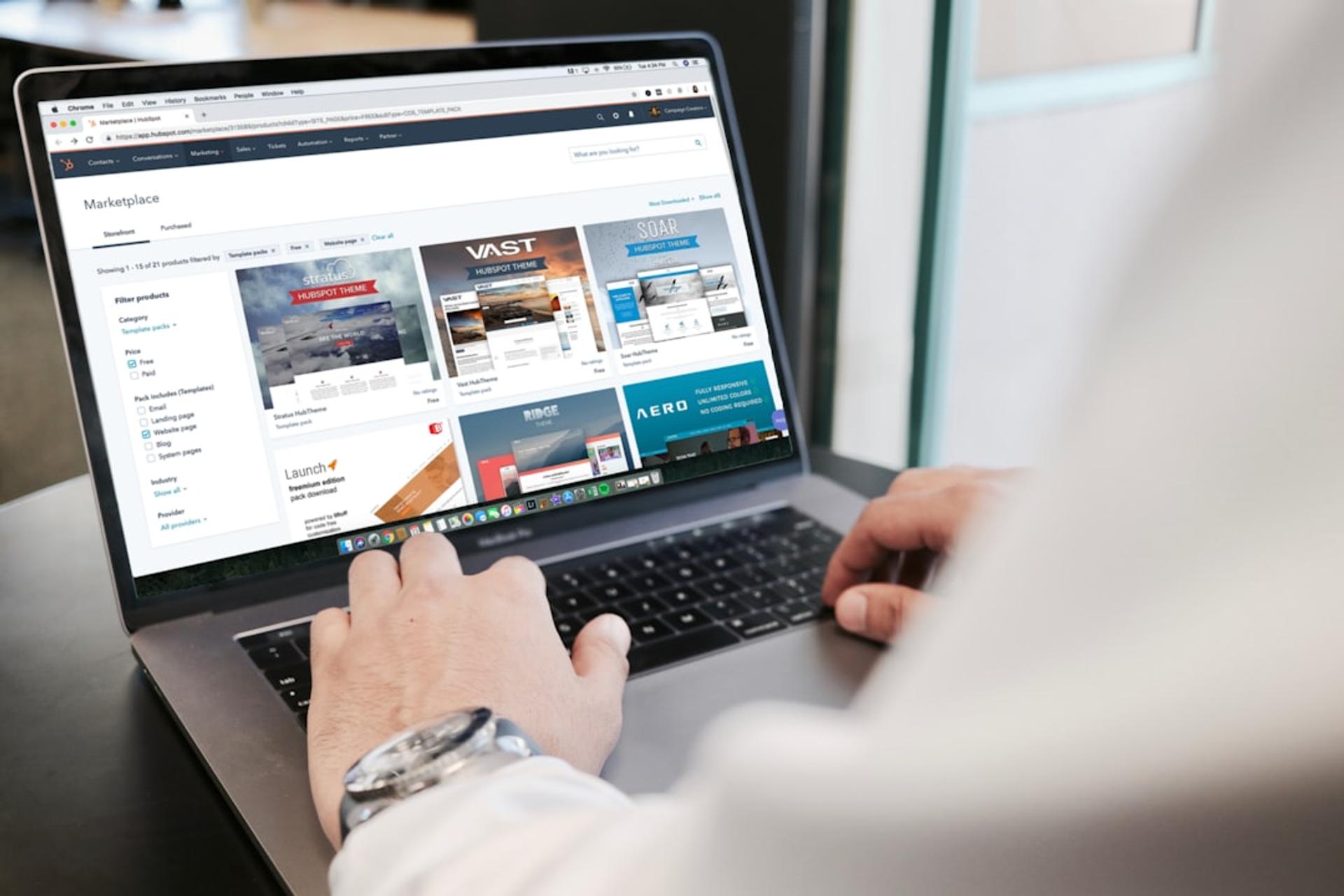
The right tech stack maps to your primary job-to-be-done, not to what is fashionable. There are four mainstream choices in 2026, and each wins a different mandate: WordPress for ownership and content control, Shopify for commerce, Webflow for high-design-fidelity marketing sites, and Next.js with a headless CMS for performance-critical, multi-channel, AI-ready builds. Next.js is the dominant React meta-framework, used by 17,921+ verified companies as of 2026.
WordPress remains the default for a reason: moderate-skill staff can maintain it, plugins handle forms, search, and redirects without custom code, and build cost stays in the USD 3,000-12,000 band. Shopify owns commerce and in 2026 bundles AI stock prediction and built-in AR product views in its Unified Commerce setup - for a beauty or fashion brand selling direct, that is hard to beat. Webflow gives designers near-total visual control with clean exported code, ideal for campaign and brand sites that change often.
| Job to be done | Recommended stack | Build cost (USD) | Maintenance burden |
|---|---|---|---|
| Ownership + content control | WordPress | USD 3,000-12,000 | Low (in-house possible) |
| Direct sales / commerce | Shopify | USD 3,000-30,000 | Low-medium |
| High design fidelity | Webflow | USD 5,000-20,000 | Low |
| Performance / multi-channel | Next.js + Headless CMS | USD 15,000-50,000 | High (specialist required) |
Headless CMS: Sanity vs. Contentful vs. Strapi
If performance and multi-channel delivery genuinely justify a headless build, the CMS choice matters. Sanity is the most customizable - its GROQ query language and configurable Studio give engineering teams near-total control, but setup is a development project in itself. Contentful is the enterprise pick: multi-language, CDN-backed, built for global brands running many markets. Strapi is open-source and self-hosted on Node.js, giving full data and security control for teams that want to own their infrastructure.
Here is the contrarian view most stack articles avoid: headless is usually the wrong choice for a mid-size brand. Every feature a WordPress plugin handles for free becomes custom development in a headless build - forms, search, redirects, previews. Editors need training. The headless CMS market is growing fast (USD 84.0 billion in 2025 to USD 91.55 billion in 2026, per industry tracking), and that momentum creates pressure to adopt it as default-modern. Resist that unless your traffic, channels, or performance ceiling actually demand it. For an authoritative primer on web performance fundamentals that should inform any stack choice, Google's web.dev is the reference we point clients to.
The Website Development Process: Discovery to Launch
Professional website development services follow a disciplined sequence, and the phase breakdown tells you where your money and time actually go. A provider who can't articulate their process - or who jumps straight from "send us your logo" to "we'll build it" - is improvising, and improvisation on a tier-1 launch is expensive.
The five-phase model below is what a senior studio runs. Note the timeline column: the slowest phase is rarely engineering. The number-one cause of stalled web projects is unprepared client content, which often takes longer than design and build combined. A brand that arrives with finished copy, approved photography, and product data ships months faster than one that doesn't.
| Phase | What happens | Typical duration | Cost share |
|---|---|---|---|
| 1. Discovery & strategy | Goals, audience, scope, sitemap | 1-2 weeks | 10-15% |
| 2. UI/UX design | Wireframes, visual design, prototype | 2-4 weeks | 25-30% |
| 3. Front-end build | Responsive interface engineering | 2-4 weeks | 25-30% |
| 4. Back-end & CMS | APIs, database, CMS, integrations | 2-4 weeks | 20-25% |
| 5. QA & launch | Testing, fixes, deployment, handover | 1-2 weeks | 10-15% |

Sagara runs this process with the same discipline we apply to a creative content production brief - strategy first, execution earned. The payoff of a structured process is fewer surprises and a launch date that holds. Foreign brands accustomed to APAC HQ governance recognize this rigor; it is the difference between an agency and a freelancer with a portfolio.
How to Choose the Right Website Development Company
Choosing a website development company comes down to six checks, in order of importance. Run them as a checklist and most of the field eliminates itself quickly.
- Define your goals and scope first. Know whether you need a landing page, a brand site, or a commerce platform before you talk to anyone. Vague briefs attract vague quotes.
- Review the portfolio for relevant work. A studio that has shipped for premium automotive or beauty brands understands the standard. Browse Sagara's portfolio - including the Porsche Macan EV launch and MINI Indonesia digital work - to see what tier-1 execution looks like.
- Check specialization and stack expertise. Confirm they actually build in the stack you need, in-house, not via subcontractors.
- Evaluate support and communication. Time-zone overlap, response speed, and English-language fluency matter enormously for a foreign brand. Ask how they handle a launch-day incident.
- Set a realistic budget against the cost tables above. A quote far below market usually means hidden scope cuts; far above usually means US-agency overhead you don't need in Indonesia.
- Check references and ask hard questions. Talk to a past client. Ask the questions buyers skip: Who owns the code and the CMS account? What happens if we leave? What is and isn't included in maintenance? How do you handle content delays?
That last cluster - the questions to ask before hiring - is where most buyers underprepare. A provider who answers them plainly is one you can trust with a launch.
Why Foreign Brands Choose Sagara for Website Development Services
Sagara Ruang is a specialist digital agency in Indonesia, built for international brands. Since 2019, from our Gading Serpong headquarters in Tangerang near Jakarta, we have shipped 100+ projects across three verticals - automotive, fashion, and beauty - with the kind of named, verifiable work that distinguishes a studio from a vendor. We have operated BMW Eurokars' Indonesia digital for three years, documented Porsche Club Indonesia, and produced campaigns for Pixy and across BMW Eurokars social media.
Our differentiation for website development services is threefold. First, bilingual capability without losing Indonesian fluency: our team writes business-grade English and native Bahasa Indonesia, so the cultural translation that breaks foreign launches happens in our heads, not in a machine. Second, transparent pricing - USD 5,000-50,000 per project, published, no quote-on-request games. Third, tier-1 standards at Southeast Asian cost, which is the structural advantage of building from Indonesia rather than commissioning from Munich or Singapore.
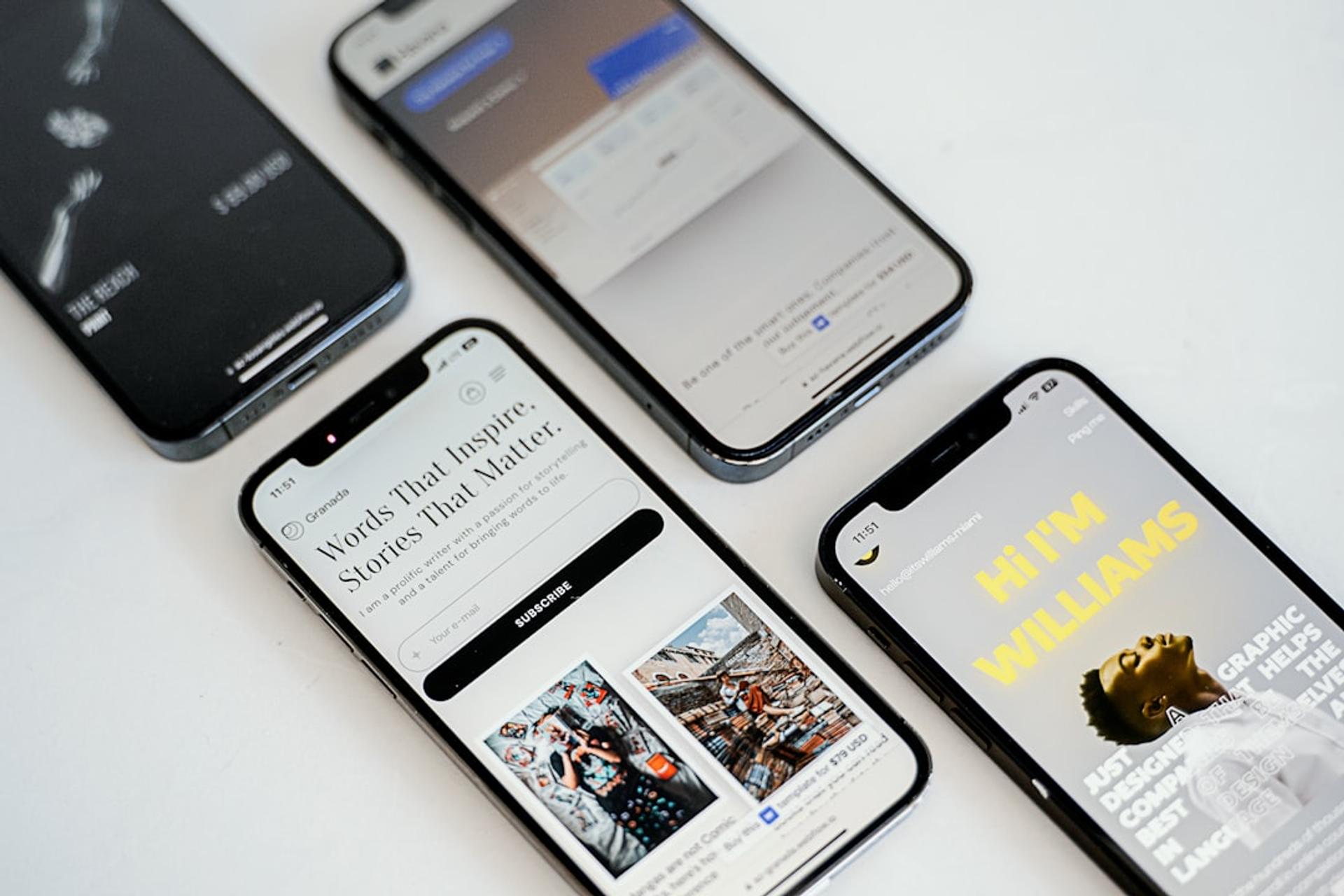
We treat a website the way we treat a film or a campaign: as a brand asset that has to perform on Indonesian infrastructure for Indonesian buyers, while meeting the governance standard a global CMO expects. If you are weighing a broader engagement, our digital marketing agency Indonesia guide maps how web fits alongside SEO, social, and content. To start a build, the fastest path is a short briefing through our contact page or our full services overview.
Frequently Asked Questions
What are website development services?
Website development services are the professional design, engineering, and maintenance of a website by a provider. They span discovery and strategy, UI/UX design, front-end and back-end engineering, CMS setup, e-commerce, security, QA, and ongoing support - delivered end-to-end rather than assembled in-house, so a brand gets one accountable team for the full build.
How much does it cost to build a website in 2026?
A website costs USD 500-250,000+ in 2026, depending on type. Landing pages run USD 500-5,000, business sites USD 5,000-15,000, e-commerce USD 5,000-40,000+, and web apps USD 25,000-100,000+. Indonesian agencies deliver comparable quality at 5-15x lower cost than US agencies, making Jakarta a strong value base for Southeast Asia.
How long does it take to develop a website?
Timelines depend on scope: a landing page takes 2-4 weeks, a custom business site 6-10 weeks, an e-commerce store 8-12 weeks, and a web app 4-6+ months. The most common delay is unprepared client content - copy, images, and product data - which frequently takes longer than design and build combined, so prepare it early.
What is the difference between web design and web development?
Web design shapes how a site looks and feels: layout, visual identity, and user experience. Web development builds the working system underneath: front-end code for the interface, back-end code for databases and logic, and CMS setup. Complete website development services deliver both, plus hosting, security, and maintenance.
What are the ongoing costs of a website?
Recurring costs include hosting (USD 16-375/year), a domain (USD 9-19/year), SSL (often free to USD 100), and a maintenance retainer (USD 500-5,000+/year). Budget USD 1,500-8,000 annually for a serious brand site. Over three years, total cost of ownership runs USD 8,000-30,000 for WordPress and USD 25,000-80,000+ for headless builds.
Should I hire a freelancer or an agency for web development?
A freelancer suits a single, well-defined project at lower cost but carries continuity and accountability risk. An agency suits brand-grade builds needing design, engineering, security, and maintenance under one team - and is the safer choice for a foreign brand launching in Indonesia, where time-zone coordination, bilingual fluency, and reliable post-launch support decide success.
Start Your Build
If you are planning a website launch in Indonesia or across ASEAN, the next step is a short, no-commitment briefing. Tell us your scope and we will give you a transparent estimate against the cost tables above - not a quote-on-request runaround.
Message us on WhatsApp at https://wa.me/+62811804608 or book a consultation through our contact page. Sagara Ruang - website development services built in Indonesia, for international brands.
Work With Us
Ready to Grow Your Brand with Sagara Ruang?
From social media content to motion branding - free initial consultation, no commitment required.
Let's work together
GOT A PROJECT
IN MIND?
Tell us about your project - free initial consultation, no commitment required.
More Articles