WordPress Website Development Services — Is It the Right Choice for Premium Brands?
Wordpress website development services are the right choice for most premium brands entering Indonesia — provided the partner treats the site as brand infrastructure, not a template job
WordPress Website Development Services - Is It the Right Choice for Premium Brands?
Wordpress website development services are the right choice for most premium brands entering Indonesia - provided the partner treats the site as brand infrastructure, not a template job. WordPress powers roughly 41% of all websites and close to six in ten sites that run a content management system (W3Techs, July 2026). For foreign brands landing in Jakarta and operating out of Gading Serpong, that ubiquity means faster launches and a deeper local talent pool than a bespoke stack offers.
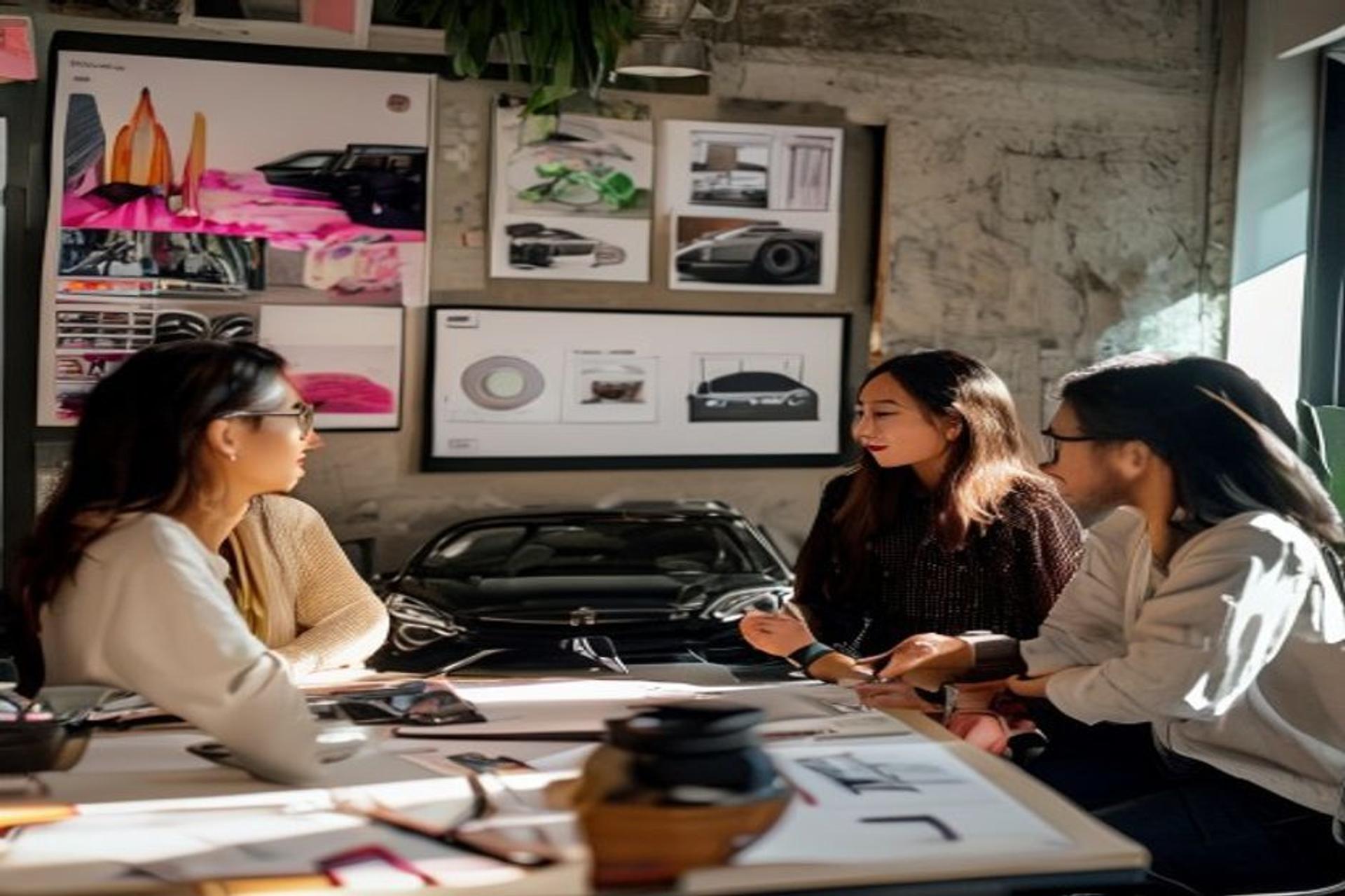
When a premium automotive brand prepared its first Indonesia launch, the marketing director had a deceptively simple question: should the campaign site run on WordPress, or on the custom stack the global engineering team preferred? The launch calendar left no room for a six-month build. The brand guidelines left no room for a site that looked one notch below the product. That tension - speed against polish, global standard against local execution - is exactly where most premium-brand web decisions live.
Quick answer: For premium brands, wordpress website development services are usually the right choice when the site must launch on a tight calendar, stay easy for local marketing teams to maintain, and connect cleanly with campaign and analytics tools - the profile of almost every Indonesia market entry. A fully custom build only wins when the brand needs unusual functionality that WordPress genuinely cannot handle well.
Key Takeaways:
- WordPress runs about 41% of all websites and roughly 59% of sites with a known CMS, so a premium brand choosing it inherits a mature ecosystem, not a niche gamble (W3Techs).
- The quality gap between a cheap WordPress site and premium wordpress website development services is not the CMS - it is design discipline, in-house production, and a maintenance system.
- Realistic investment for premium-brand work in Indonesia runs USD 5,000-50,000 per project (approximately IDR 75,000,000-750,000,000), with care retainers on top.
- A custom build only beats WordPress for genuinely unusual functionality; for brand sites, campaign hubs, and multilingual launches, WordPress is the faster, safer call.
- For foreign brands, the risk is rarely the platform - it is choosing a partner who treats a tier-1 brand site like a rate-card SME project.
What Do WordPress Website Development Services Actually Include?
Ask three agencies what wordpress website development services cover and you will get three different answers - which is precisely the problem for a marketing director comparing quotes. A proper premium engagement is not "install a theme and hand over a login." It spans discovery, design, custom theme development, content architecture, integrations, and a maintenance plan that keeps the site secure and fast after launch.
At the premium tier, the scope typically includes a bespoke theme built to brand guidelines (not a marketplace template), page-speed and Core Web Vitals work, structured data for search, multilingual support for foreign brands running English and Bahasa Indonesia in parallel, and integrations with the brand's marketing stack - analytics, CRM, campaign landing pages, and lead capture. For a foreign brand, the multilingual and localization layer is where generic global agencies quietly fall short.
The deliverable that separates real wordpress website development services from a commodity build is the handover: documented components, a staging environment, and a team that can extend the site as campaigns evolve. A launch is a milestone, not the finish line.
Why Premium Brands in Indonesia Still Choose WordPress
There is a persistent myth that "serious" brands outgrow WordPress. The data says otherwise: at close to 59% of all sites with a known CMS, WordPress is the default for a large share of the web, premium names included. The platform scales from a single campaign microsite to a multilingual corporate presence without forcing a rebuild.
For a brand entering Southeast Asia, three practical advantages matter more than ideology. First, speed - a WordPress launch fits a campaign calendar in weeks, not quarters. Second, local maintainability - Indonesian marketing teams can update content without filing an engineering ticket, which matters when a product drop or an event moves fast. Third, talent depth - Jakarta and the wider ASEAN region have a mature pool of WordPress specialists, so a brand is never locked into a single vendor.
Compare that to a bespoke framework: elegant in theory, but it hands the brand a maintenance dependency that only the original developers understand. For most premium brands, wordpress website development services buy independence, not just a website.
When Wordpress Website Development Services Beat a Custom Build
The honest answer to "WordPress or custom?" is: it depends on what the site has to do. Below is the decision framework a marketing director can actually use, instead of the vendor's preferred answer.
| Decision factor | WordPress wins when… | Custom build wins when… |
|---|---|---|
| Launch timeline | The site must ship within a campaign window (weeks) | The brand has 6+ months and no fixed launch date |
| Content velocity | Local teams update content weekly without developers | Content almost never changes after launch |
| Functionality | Needs are standard: brand site, blog, campaign hub, forms | Needs are unusual: a bespoke web app or real-time product |
| Multilingual | EN + Bahasa Indonesia (and more) run in parallel | Single language, single market |
| Maintenance risk | Brand wants a large talent pool and vendor independence | Brand has a permanent in-house engineering team |
| Budget horizon | Predictable build + care retainer | Large upfront capital and ongoing engineering payroll |
For roughly nine in ten premium-brand scenarios in Indonesia - a launch site, a corporate presence, a campaign hub, a lookbook, a multilingual brand story - wordpress website development services are the faster, lower-risk path. The custom route earns its keep only when the brand's core product lives on the web itself.
The mistake premium brands make is choosing custom for prestige reasons, then discovering in month four that every small change needs an engineering sprint. Prestige should live in the design and the production quality, not in an over-engineered stack.
What Premium WordPress Development Costs in Indonesia
Pricing is where most agencies go quiet and ask you to "book a call." Transparency is a differentiator, so here are realistic ranges for premium wordpress website development services delivered in Indonesia. Currency is shown in USD first, with IDR in parentheses for local context.
| Package | Typical scope | Investment (USD) | Investment (IDR, approx.) |
|---|---|---|---|
| Campaign / brand microsite | Bespoke design, 5-10 pages, forms, analytics | USD 5,000-12,000 | IDR 75,000,000-180,000,000 |
| Full brand or corporate site | Custom theme, blog, multilingual, integrations | USD 12,000-30,000 | IDR 180,000,000-450,000,000 |
| Complex multi-language build | WooCommerce or advanced features, multi-market | USD 30,000-50,000 | IDR 450,000,000-750,000,000 |
| Care & maintenance retainer | Security, updates, speed, content support | USD 3,000-15,000 / month | IDR 45,000,000-225,000,000 / month |
These ranges reflect senior, in-house production - not offshore ticket-fulfilment. For comparison, enterprise WordPress agencies in the US and Europe routinely bill USD 150-300+ per hour, and large migrations run well into six figures. A capable Indonesia partner delivers tier-1 craft at a materially lower rate, which is part of why foreign brands run their ASEAN builds here rather than out of Singapore or Munich.
One caution: a quote far below these ranges is not a bargain - it usually signals a template swap, outsourced production, or a missing maintenance plan. The cost of redoing a premium site nine months later erases the initial saving.
Work With Sagara
Got a project in mind?
Free initial consultation, no commitment. Or see our services.
The Hidden Risks of Cheap WordPress Development
A low quote hides its costs in the places a marketing director does not see until launch week. Cheap wordpress website development services tend to fail in the same four ways, and each one is expensive to fix after the fact.
Security is the first. WordPress's popularity makes it a target, and an unmaintained site with outdated plugins is a standing liability - one no premium brand wants attached to its name. Speed is the second: bloated themes and unoptimized images tank Core Web Vitals, which hurts both search ranking and the first impression a luxury buyer forms in the first two seconds (Google web.dev).
The third is brand fidelity. A template-driven build looks acceptable on the demo and one notch below the product in reality - fatal for a brand whose entire value is precision. The fourth is orphaning: a cheap developer disappears after launch, leaving no documentation and a site no one else can safely touch. Premium work is a system with an owner, not a one-off file drop.
How to Choose a WordPress Development Partner in Indonesia
The platform decision is easy; the partner decision is where premium brands win or lose. When you evaluate agencies for wordpress website development services, the questions that matter are not about WordPress at all - they are about production standard, brand experience, and how the team behaves after launch.
Ask to see work for brands at your tier. An agency that has produced for premium automotive, fashion, or beauty clients understands strict brand guidelines in a way a general SME shop never will. Ask who actually produces the design and front-end - in-house senior teams hold quality that outsourced chains cannot. Ask what the maintenance relationship looks like in month six, not just launch day.
For a foreign brand, one more filter matters: can the team write and think in both English and Bahasa Indonesia without losing nuance? Cultural translation - how a claim lands with an Indonesian audience, what regulatory context applies - happens in the team's heads, not in a translation plugin. That bilingual fluency is the quiet differentiator between a Jakarta specialist and an APAC agency running Indonesia from a satellite desk.
Sagara Ruang approaches wordpress website development services from this brand-first angle. You can see the scope on our web development service page and the wider capability on our services overview. For how this fits a full Indonesia market-entry program, our guide to choosing a digital marketing agency in Indonesia covers the surrounding decisions.
Security, Speed, and Maintenance: The Long Game
A premium site is not a project you finish - it is an asset you operate. The brands that stay ahead treat wordpress website development services as an ongoing relationship, because the two things that quietly erode a site over time are neglected security and creeping slowness.
Maintenance done properly means scheduled plugin and core updates on staging before production, uptime monitoring, regular backups, and a quarterly performance pass so Core Web Vitals do not drift as content grows. It also means someone who knows the codebase is on call when a campaign needs a new landing page at short notice - a routine demand for any active brand.
This is the layer where "one moment, many channels" thinking pays off: a launch, an event, or a seasonal campaign should feed the site as a durable asset, not live and die in a single push. A well-maintained WordPress site compounds in value; a neglected one becomes a rebuild waiting to happen.
Our Methodology & Experience
Our clearest reference point for this topic is XPENG's Indonesia launch (2026), a premium Chinese EV brand entering the market with zero local recognition. The digital presence had to do two jobs at once - build awareness from scratch and establish premium positioning against legacy automotive names trusted for decades - which is precisely the pressure a premium brand's first website carries. Our approach was a single technology-first narrative, backed by cinematic production and event-based activation, so the launch lived on in digital channels rather than only at the venue.
The generalizable lesson for wordpress website development services is that a new premium brand's site is not a brochure - it is the foundation that has to carry positioning and awareness together, from day one. Across our automotive and beauty work, one operating principle holds: output caliber equals brand caliber, and full in-house production is the only way to hold the strict guidelines that brands like these enforce. You can review the engagement on our XPENG launch case study and the long-term discipline behind it in our BMW Eurokars social media work. More on the team and our Gading Serpong base is on our about page.
Frequently Asked Questions
Are WordPress website development services suitable for luxury and premium brands?
Yes. WordPress runs a large share of premium sites worldwide, and the platform is not the ceiling on quality - design discipline and production standard are. The reason some premium sites look cheap is a template-and-plugin build, not WordPress itself. Well-executed wordpress website development services deliver the precision a luxury brand demands.
How long does a premium WordPress site take to build in Indonesia?
A campaign microsite can launch in a few weeks; a full multilingual brand site typically takes six to twelve weeks depending on content readiness and integrations. WordPress fits a campaign calendar far better than a custom build, which is one of the main reasons foreign brands entering Indonesia choose it.
How much should a premium brand budget for WordPress development?
Realistic ranges for premium work in Indonesia run USD 5,000-50,000 per project (approximately IDR 75,000,000-750,000,000), plus a care retainer of USD 3,000-15,000 per month. A quote far below that range usually signals a template swap or a missing maintenance plan rather than a genuine saving.
WordPress or a custom build - which is better for a premium brand?
For standard brand needs - a launch site, corporate presence, campaign hub, or multilingual story - WordPress is faster, cheaper to maintain, and lower risk. A custom build only wins when the brand needs unusual functionality that WordPress cannot handle cleanly, such as a bespoke web application.
Can a WordPress site handle English and Bahasa Indonesia together?
Yes, and for foreign brands it should. Multilingual support is a core part of premium wordpress website development services, letting a brand run English for its global audience and Bahasa Indonesia for the local market from one site - with the cultural nuance handled by the team, not a translation plugin.
What happens to my WordPress site after launch?
That depends on your partner. A serious agency provides a maintenance relationship - security updates, performance passes, backups, and content support - so the site stays fast and secure as it grows. Treating the site as an operated asset, not a finished project, is what separates premium work from a one-off build.
Ready to Build a Site Worthy of Your Brand?
If your brand is entering Indonesia or upgrading a site that no longer matches the product, Sagara Ruang builds premium WordPress presences from our base in Gading Serpong, Tangerang - for international brands in automotive, fashion, and beauty. No template shortcuts, no offshore ticket queue: senior in-house production, transparent pricing, and a team that maintains the site long after launch.
Book a no-commitment consultation and get a custom proposal for your wordpress website development services. Message us on WhatsApp at +62 811 804 608 or reach the team through our contact page.
Work With Us
Ready to Grow Your Brand with Sagara Ruang?
From social media content to motion branding - free initial consultation, no commitment required.
Let's work together
GOT A PROJECT
IN MIND?
Tell us about your project - free initial consultation, no commitment required.
More Articles